Prototyping and Design
I was reading Christopher Schwarz’s blog on Lost Art Press this morning, where he writes about soliciting feedback early in the design process rather than at the end, and wholeheartedly agree. As a veteran of both fine art school with their critiques, and the advertising world where it can be viscous, the scathing final critique is of little value to the hobbyist and maybe not all that valuable in an art school. Sure, it held value to me in that it “toughened me up for the real world” of advertising, but I’m not sure that’s what art schools are supposed to be doing.
I wanted to look into this stage of design feedback, early on, and compare it to some comments on the recent Shoptalk Live podcast with Michael Fortune, Ben Strano and Mike Pekovich as well as James Krenov, and my time living in Rome just up the hill from the Vatican.
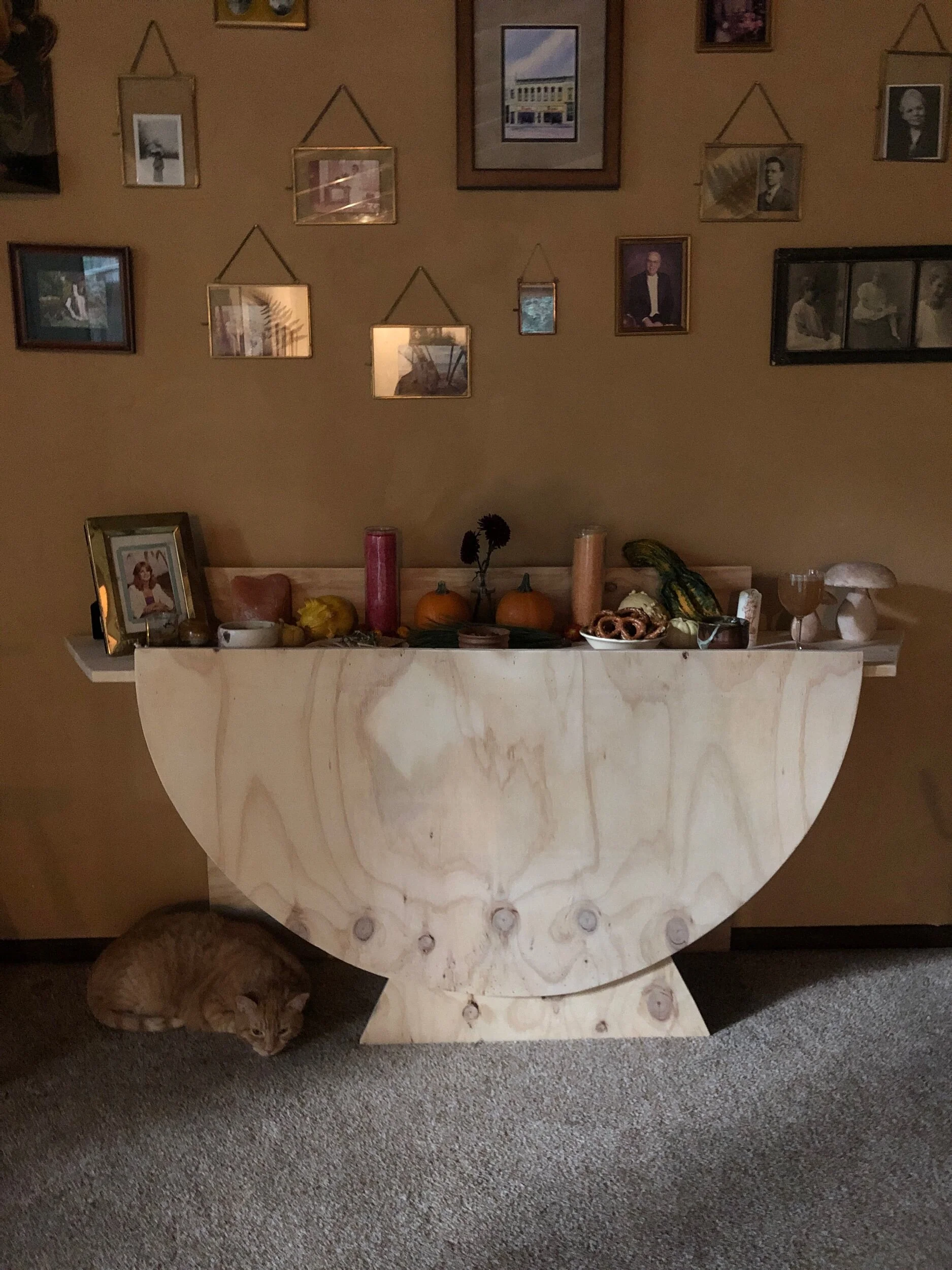
I just made a piece for our home that was pure mock-up. 1/2” CDX plywood (Cheap and rough, I at least sanded the edges nicely so no splinters) nail gunned together, with big chunks of 2x4 that was sitting in my yard nailed here and there as battans. And it’s an odd, not totally functional, basically 4ft long sideboard.
I wanted to actually use the shape some to see if it functioned at all. Drawings are nice but didn’t tell me enough - oddly, I’ve found the more abstract and sculptural a piece the less important the drawing truly is, you have the see if the thing can support its own weight or serve the purpose. Even more so than say, a Queen Anne style reproduction.
I’d run into this in software design development- this prototype was almost too good that I had made. I would have been better served by, I think, making it out of cardboard. That’s a material that’s propbably free, I can actually run through a bandsaw so I can kinda-sorta start working out some of the motions of construction a bit more than just pen and paper, and ironically, the fact that you can’t really set things on it is an asset. It tells any audience (in this case, my partner, who will also be using any furniture for the house I make) that “this is just an idea”. Also, people know cardboard can easily be changed. Don’t like that shape? Here are some scissors.
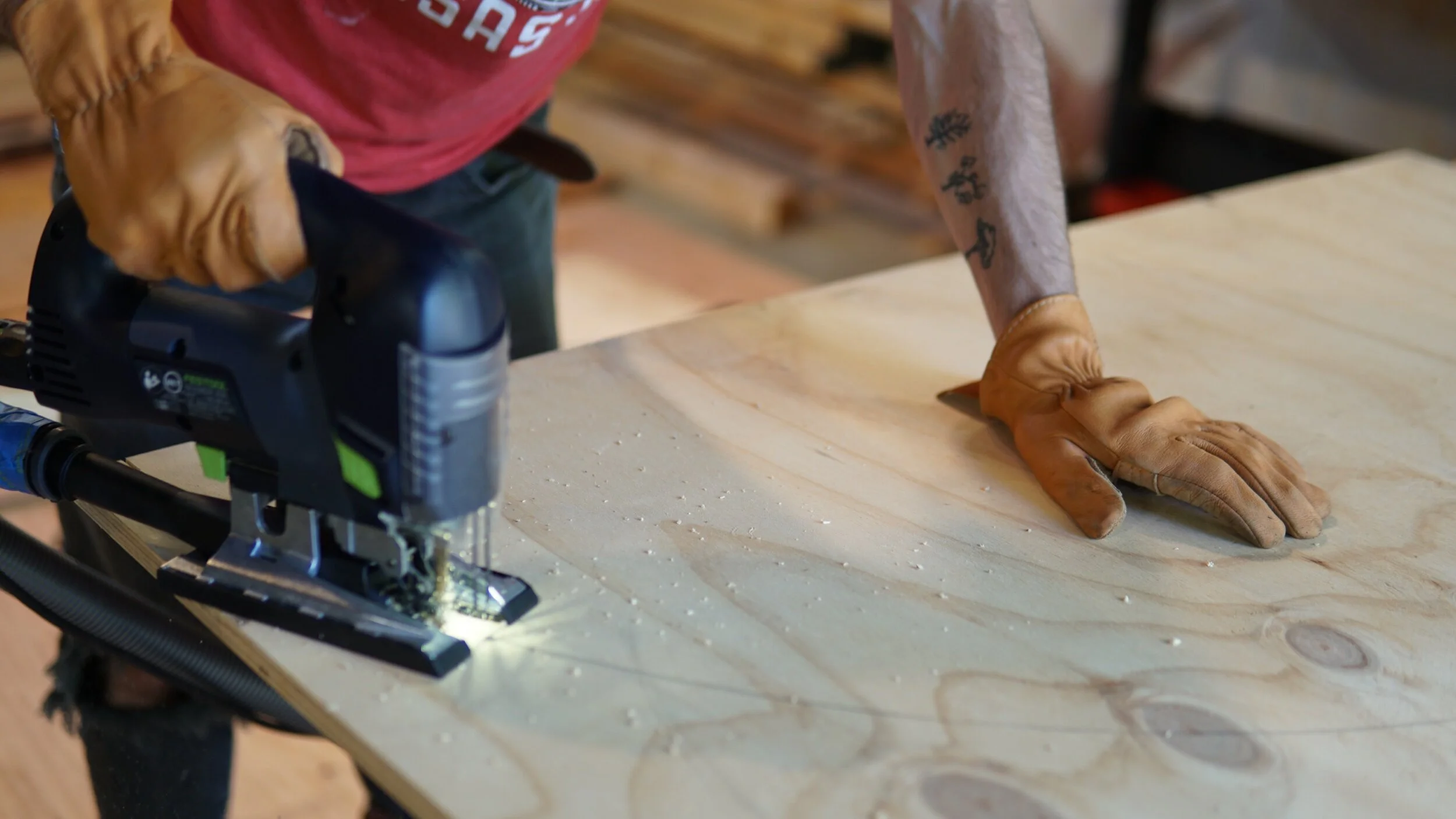
The other reason I did this was to try out a new track saw, jigsaw, nail gun and belt sander. I wanted to see if I could use that set of tools to build the *idea* of a case piece in an hour or two. I knew I could, we used to in high school theater set building, but I wanted to try here, now and today. Make sure it all worked as expected. That resulted in the overbuilt prototype.
Making a prototype can serve different purposes. Is the piece for a client? Or for you and your family? There will be flaws in your prototype, and they will focus on those flaws- are they so distracting that it will make it hard to see beyond the flaw in the way you can? It will be much more difficult and you will need to communicate your intent. For this reason, it’s very important to communicate clearly what you are asking for feedback on.
For example, it’s easy to guess that I will be using better wood than I did, but I’ve given no indication in my prototype as to what that might be. It’s currently unfinished ply so it’s a light oat straw color, all I’ve learned is that it’s far too bright.
What is not obvious is that I’m considering making the front doors, though it immediately is obvious to me that if they become doors hinging them will not work as is and a fairly major revision will be in order. What is not obvious is that the back board is out of square with the front, and that the whole piece is supposed to be symmetrical. Did Andrew want to go assymmetrical and just failed at it? It’s a fair leap.
In art school, when we were drawing, we used to say “I’m not sure I can read what’s going on here” that is, the arrangement of pigments in the page isn’t coalescing as a symbol that I can interpret. I know that you’re drawing a person sitting on a chair at a table, so I expect to see their legs, the chair legs and the table legs beneath, but I’m not sure what’s going on here. Is my prototype communicating what it is intending to represent in its final form in a way that an uninformed audience can understand it? If not, how can you fill in those details for them and which are necessary up top.
If I ask the advice of a woodworking teacher they are going to likely understand what I’m showing them faster, as the evidence of what’s simply quick work is more immediately clear to them, and the feedback is probably going to be more along “how would you build this for real”. Very valuable, but I would also want to prepare my questions about process to make the most of it. Often, the most brilliant technical craftspeople make the false step of solving the very next technical problem in the chain in excruciating detail, missing that in this phase whole parts can change rapidly making that advice either moot, or at the very least not something to commit to quite yet but held close and set aside until the real values can be actually input into the final design before production begins.
And these changes can and will happen when what we might call in the corporate world then”non-technical stakeholder feedback” comes in, but in this case, my partner who has a great eyr, and is going to be using it.
This is also the cold, rational way to make something without any personal expression or creativity or any special purpose for object you’re making. It worked great for designing train systems to keep them running on time and people safe. It was great for pitching global ad campaigns.
But, in this case, I’m actually making an altar. An altar has special purpose, both real and beyond the material. And this is my altar. When it comes to woodworking, I’m more of an artist than a crafts person. I designed cold, rational systems that ran trains in the New York tri-state area, there’s no room for personal expression there, and there shouldn’t be. What art can do is ask questions - and this is a piece of furniture that I think should do that. The way Michaelangelo or any of the artists at the Vatican could make work that served its purpose, was beautiful and honorific as it was supposed to be, but is so good that it could change the way I saw the relationship between man and God.
Of course, I can think of no combination of apron, tabletop and stretcher that could make me feel this way. It has to involve some kind of more abstract symbol to communicate such an idea- “The Final Judgement” painted on the back wall of the Sistine Chapel does this, but it’s a painting, not a functional object. Enough time spent in St Peter’s Square and the functional art of the collapse, protecting us from rain and serving as a permeable barrier for every day use that can also be closed for security during services is another- on a random Tuesday, sitting painting in the middle, I could actually feel held by the mother arms of spirit. All from some marble stacked up and carved in just the right way.
There’s no right way to design or prototype. I heard Mike Pekovich, Ben Strano and Tom McLaughlin talk about woodworking design in the latest shoptalk live - it was a really good conversation, but it steered toward the “work it all out in paper first” method and advised against, although not explicitly, the Krenovian notion of “composition” - that is, designing as you go, which is especially important in studio furniture and artistic fine woodworking. This is where details down to grain alignment of a single piece of wood almost have to allow some room for flexibility, if not a philosophy worth fully embracing. Krenov was said to work from a single crude pencil sketch later in life. Surely he was mapping it out mostly in his head from experience, but leaving room for your intuition along the way, not knowing but trusting that you will find the answers and that you the maker have a strong voice is important too.